The photos that make the best colouring pages
There is no one kind of photo that makes the best colouring page. The more there is in a photo, the more there is to colour, so a photo with things close to the camera and things behind them gives you more to colour than a tidy shot of one subject. That stays true however well the photo was taken, and whether it is of a person, an animal, a building or a view.
Jump to contents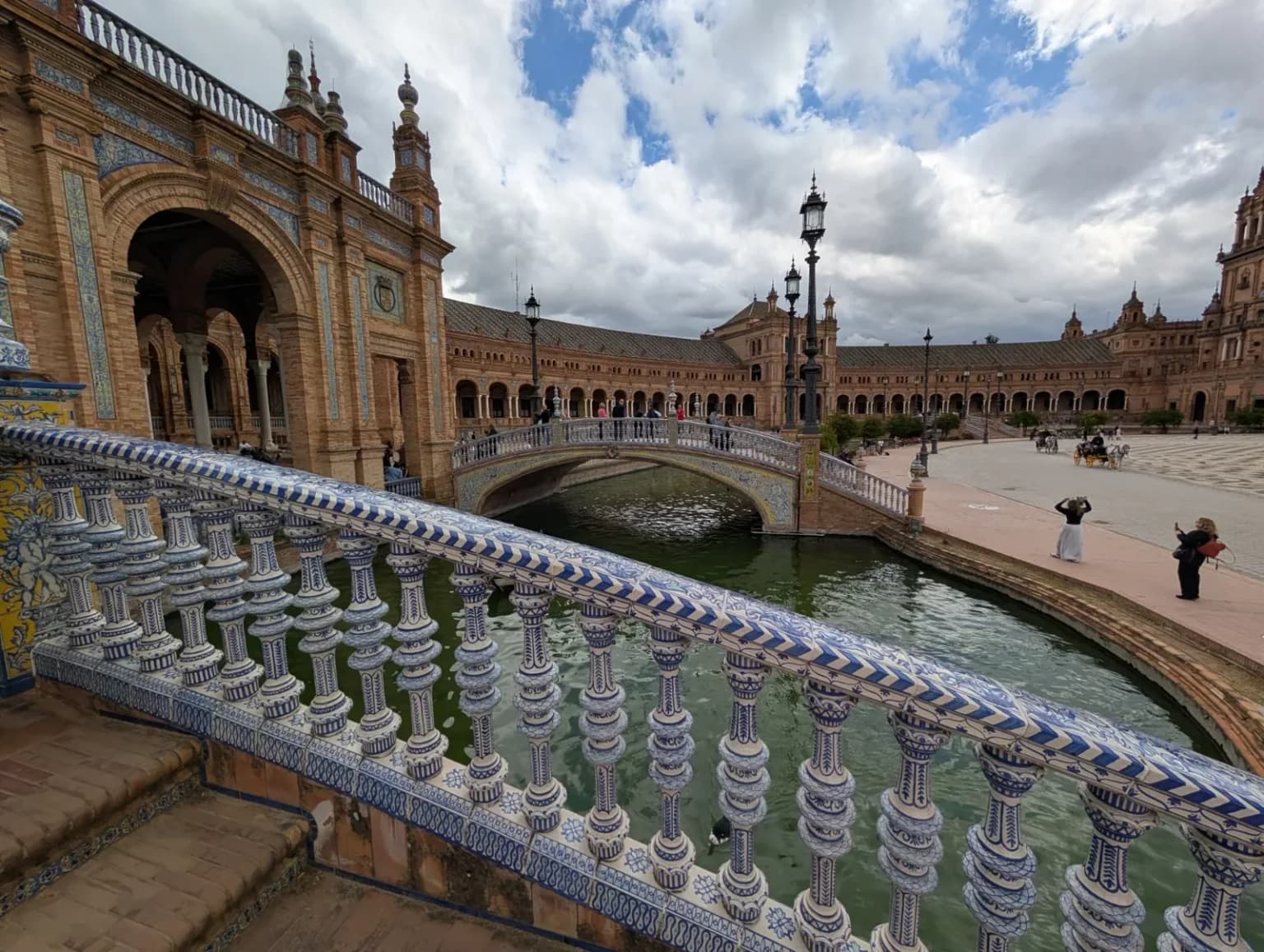
Why does a detailed photo make a more detailed colouring page?
The more there is in the photo, the more the drawing has to work with. A busy scene comes back with a lot to colour, and a plain one comes back with a little.
Two photos from the same place a few minutes apart show what that means. Both are from a canal in Seville, the arches from the bridge and the duck from a rowing boat on the water underneath it.
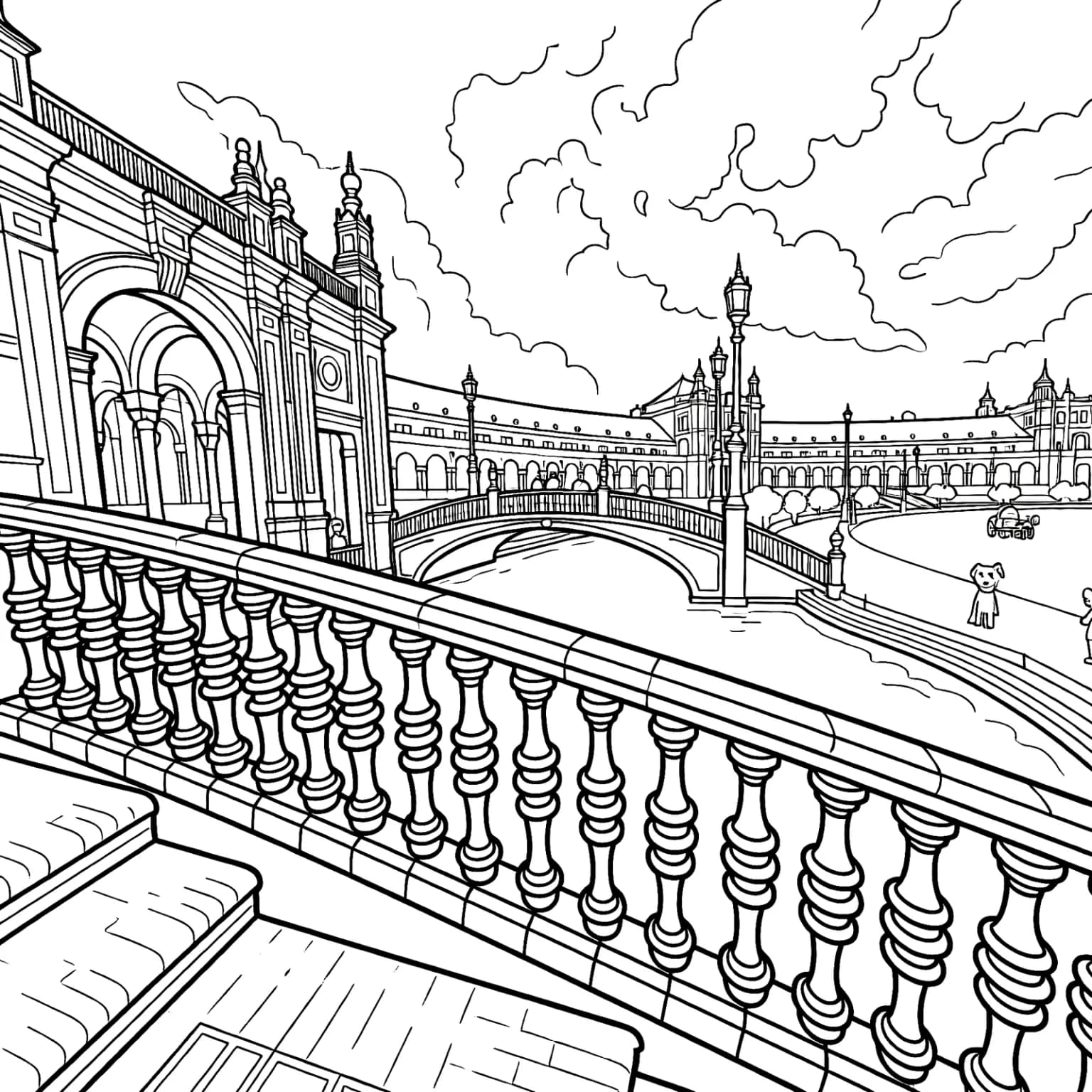
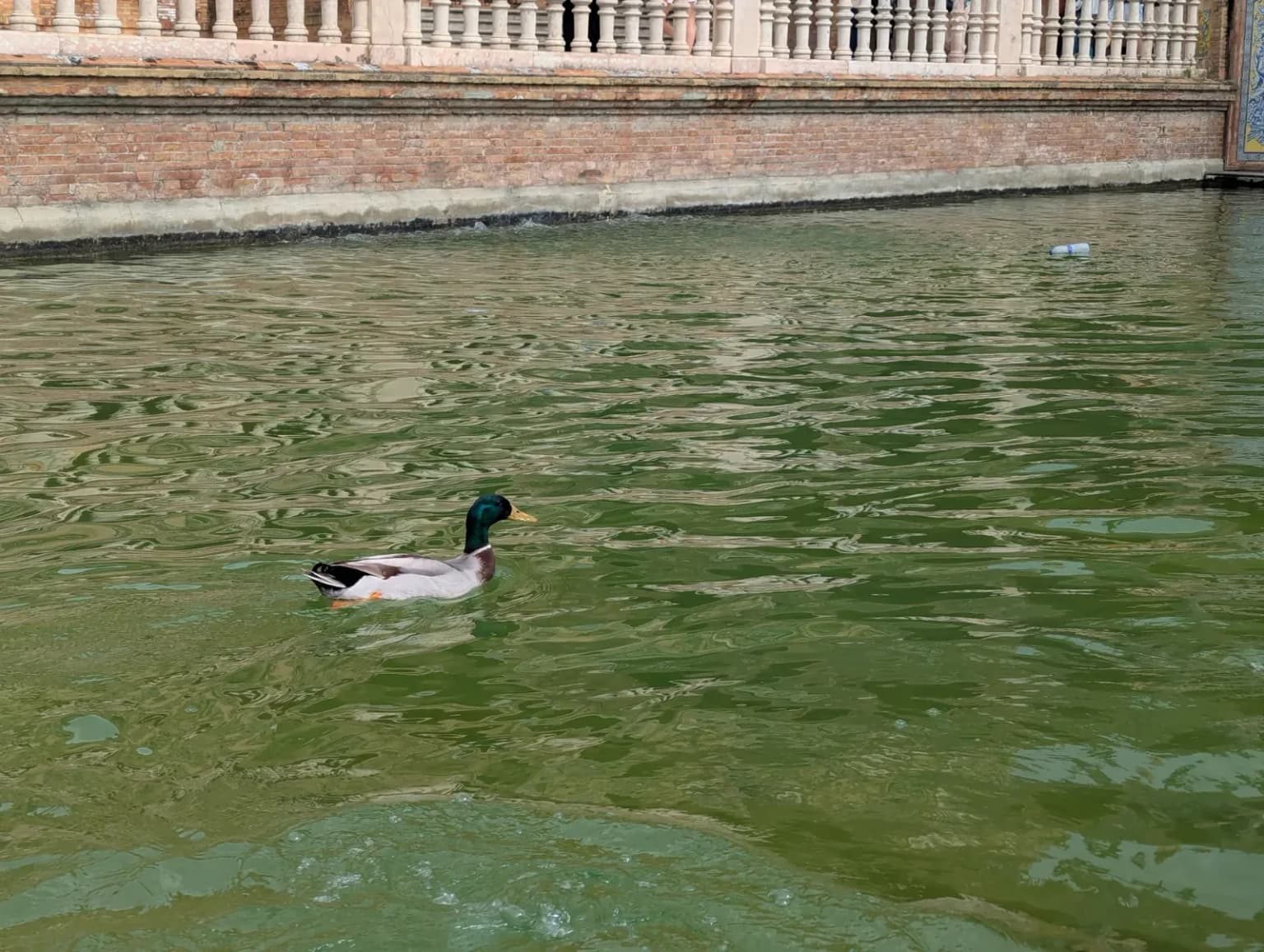
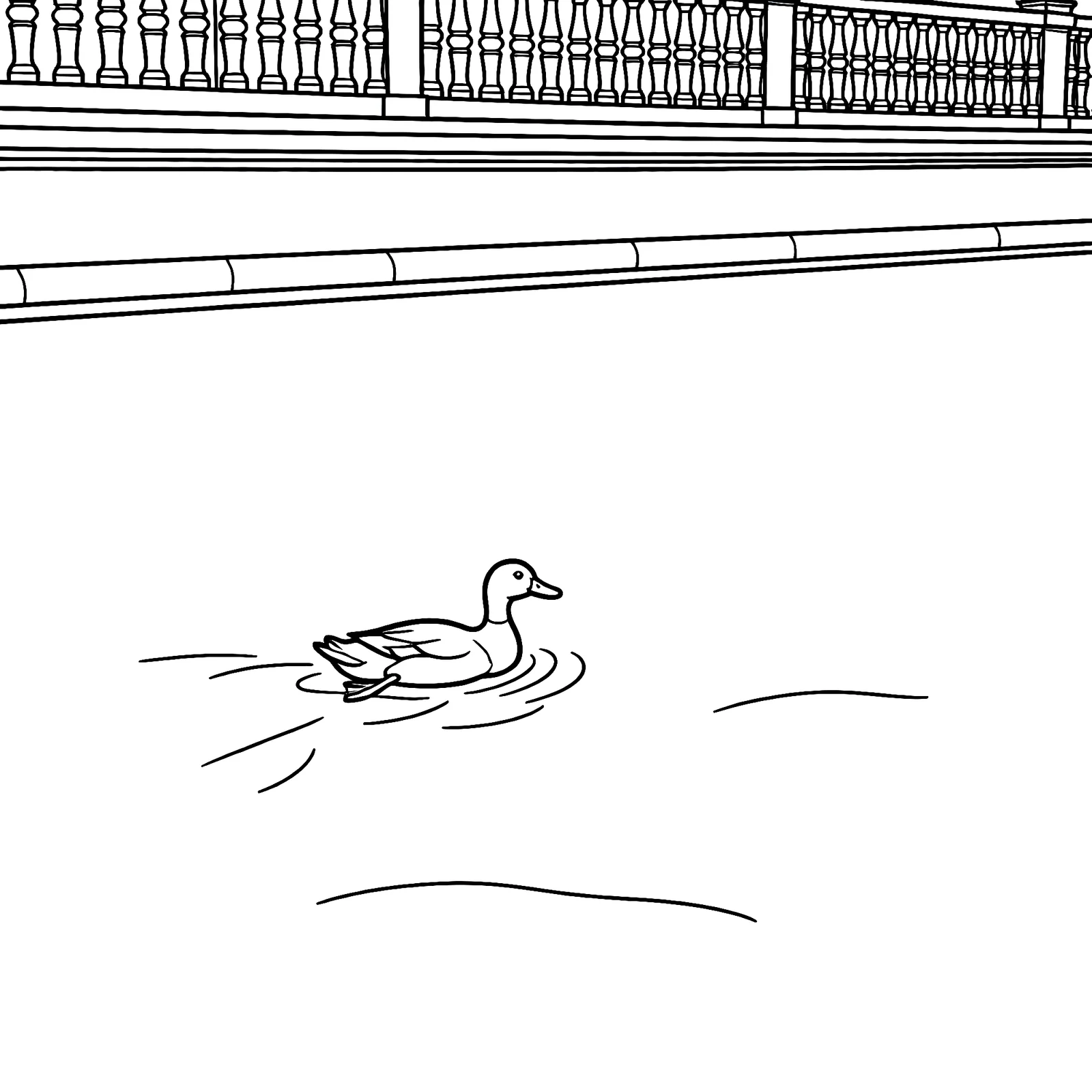
Same afternoon and the same canal, and the two pages are nothing alike. The arches page has something to colour in every corner of it. The duck page is an easier colour, one big shape and a lot of water you can fill in however you like. You might well want both, one for a long afternoon and one for a quick go.
What does a simpler page give you?
Less to colour, and a different kind of page rather than a worse one. This one is a beach in Cornwall, a wide view with the town behind and a few people a long way off.
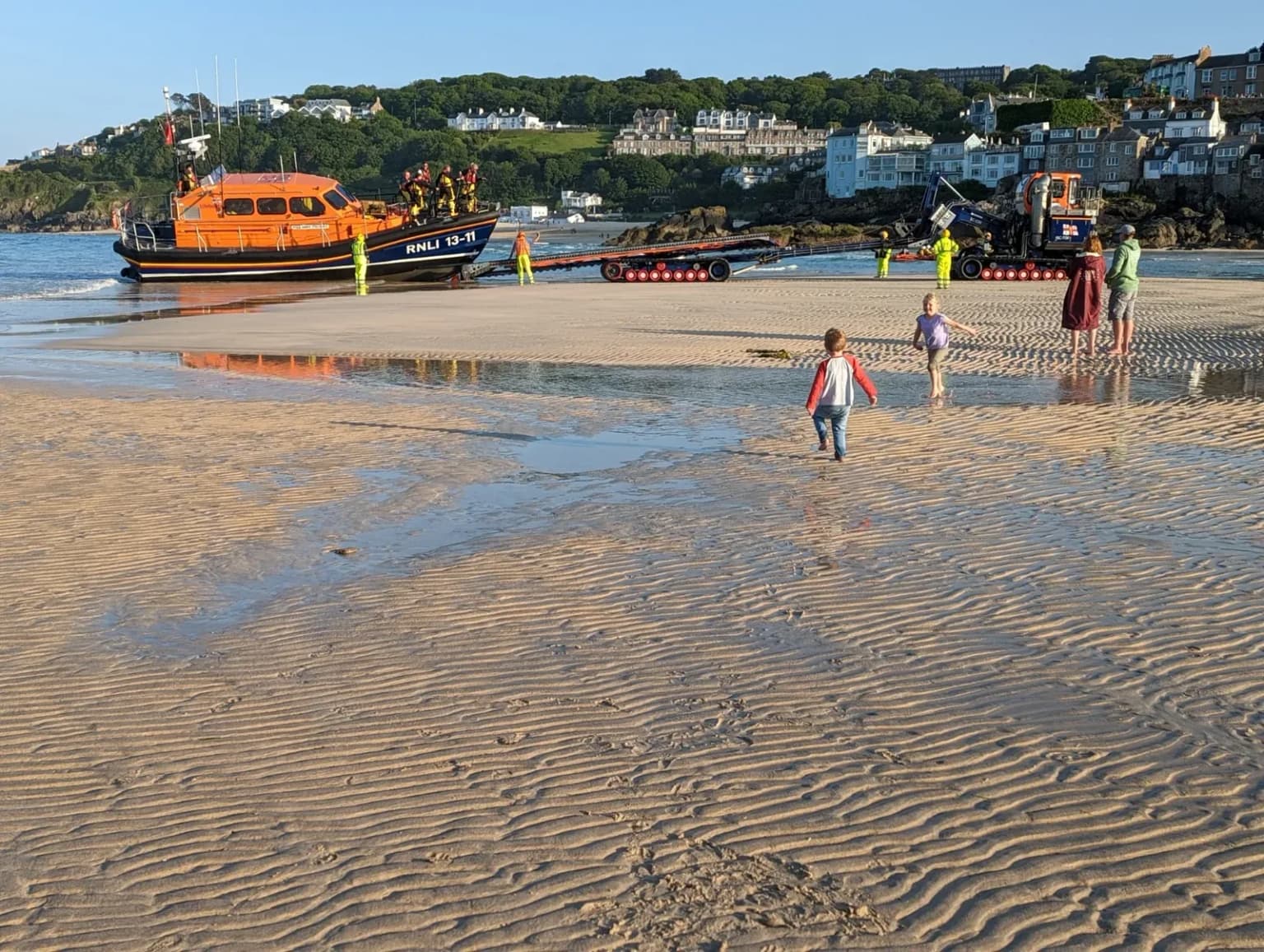
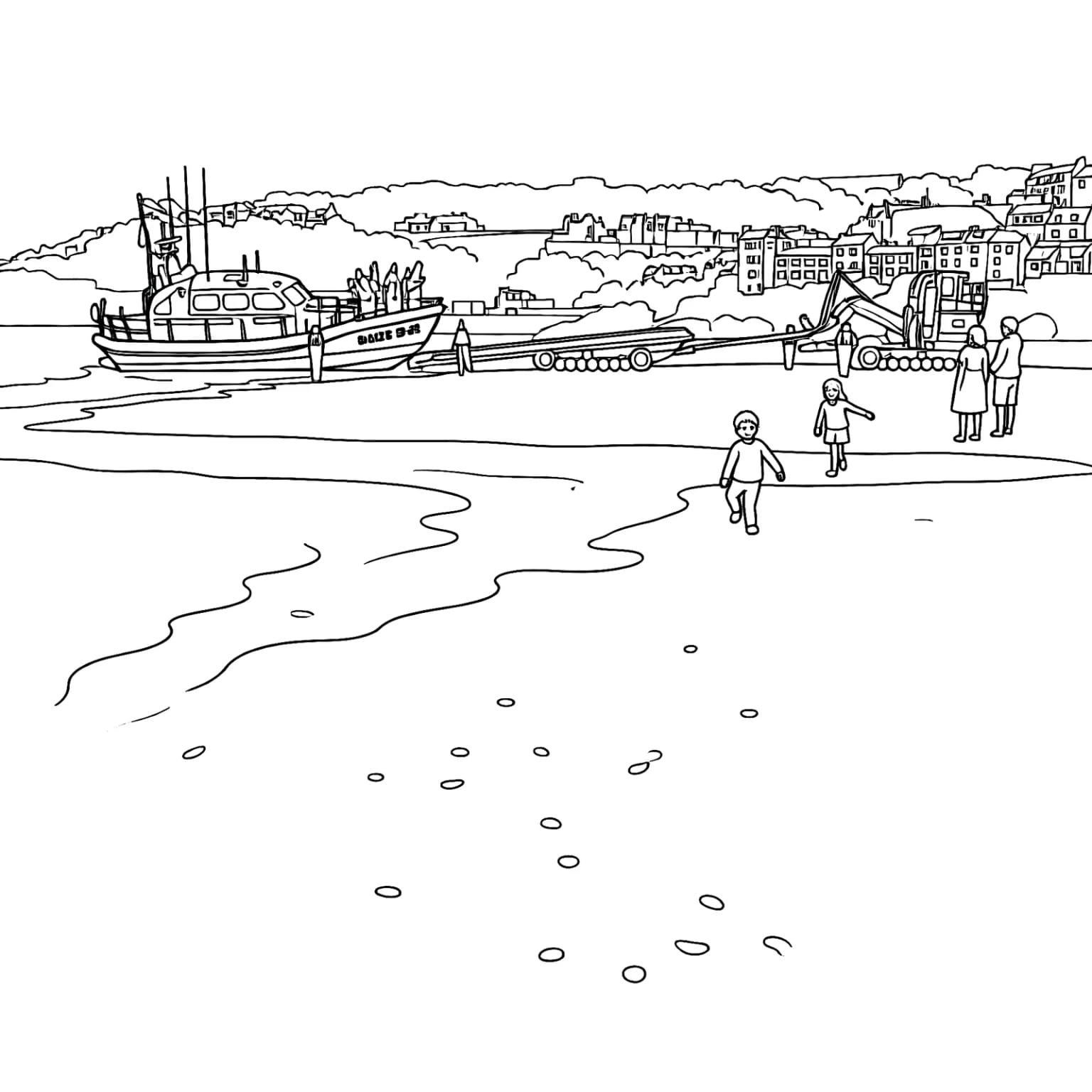
What you get out of a page like this depends on how you colour. If you like blending, big soft areas where the sand runs into the sea, there is plenty to do on a page like this. If you are colouring one colour inside one outline, it won't take long.
Does it work the same way for people, animals and buildings?
Yes, it works the same whatever is in the photo. A person, a horse or a building on its own is one shape to colour, and everything round it is where the rest of the colouring comes from.
Two children in a garden
These are my kids in a garden, close to the camera, with big leaves and a path behind them. Their faces are big enough to make out, and the garden fills everything else.
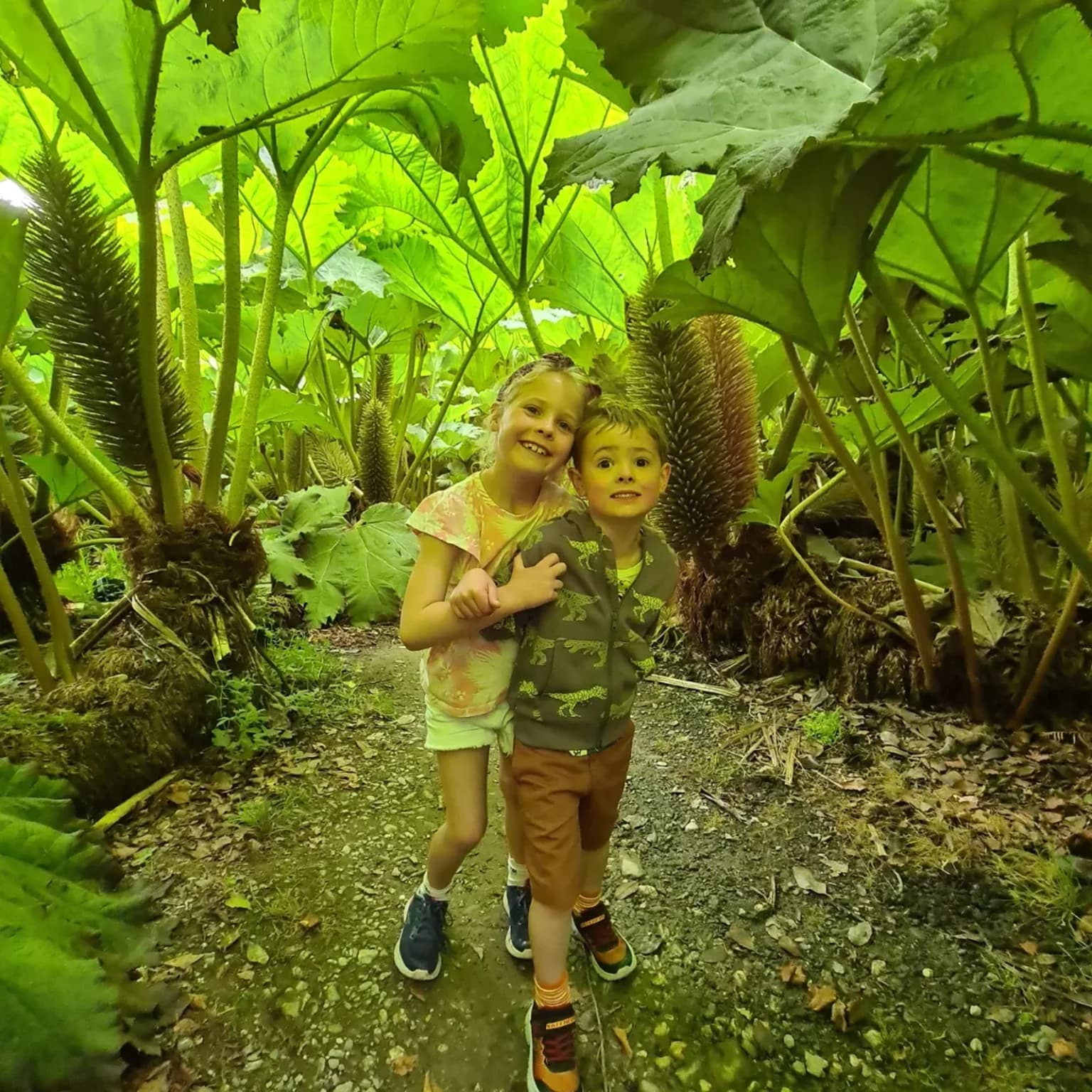
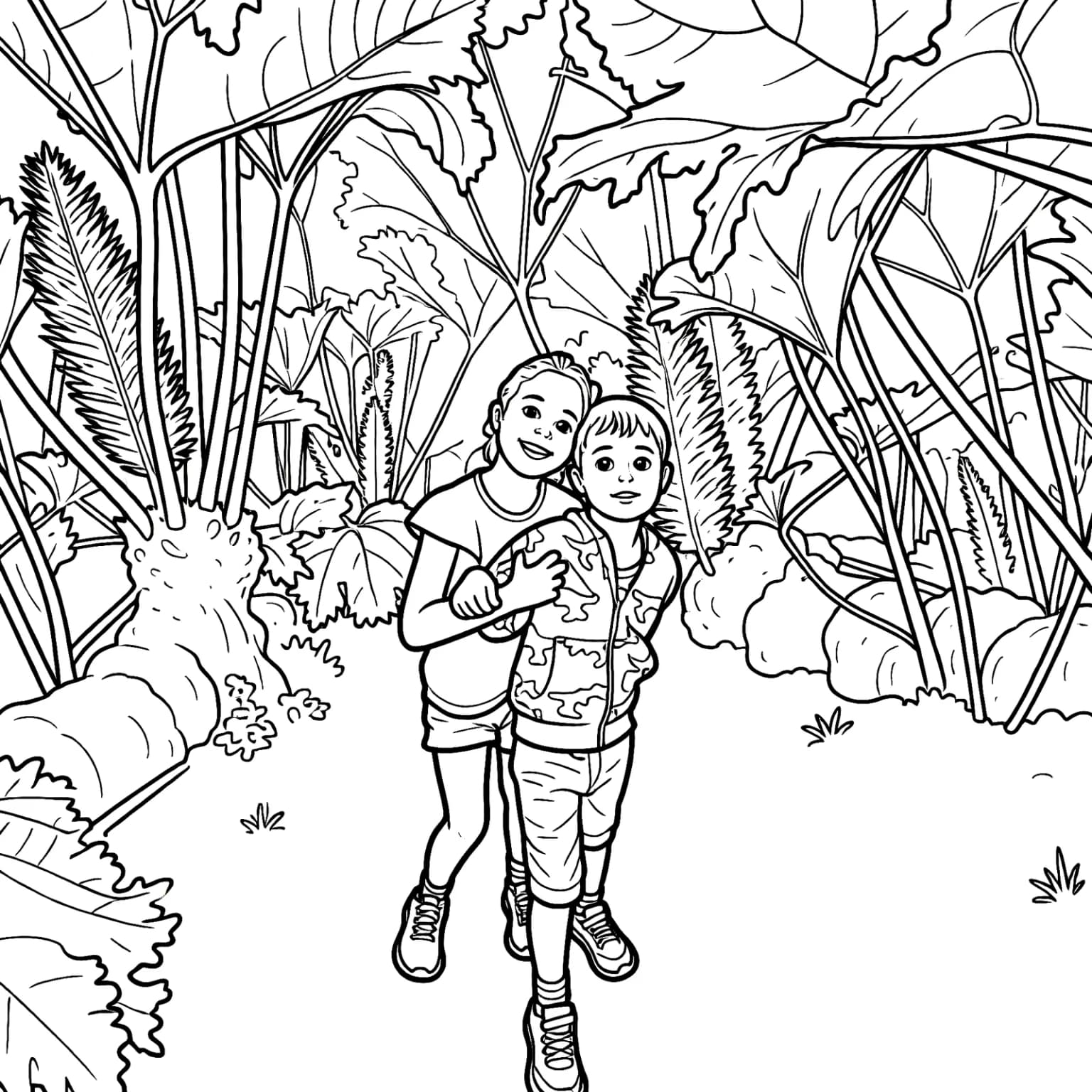
When the people are a long way off you get a different page. Once you can't make out a face there is nothing to recognise, and the page is whatever was behind them.
A rollercoaster
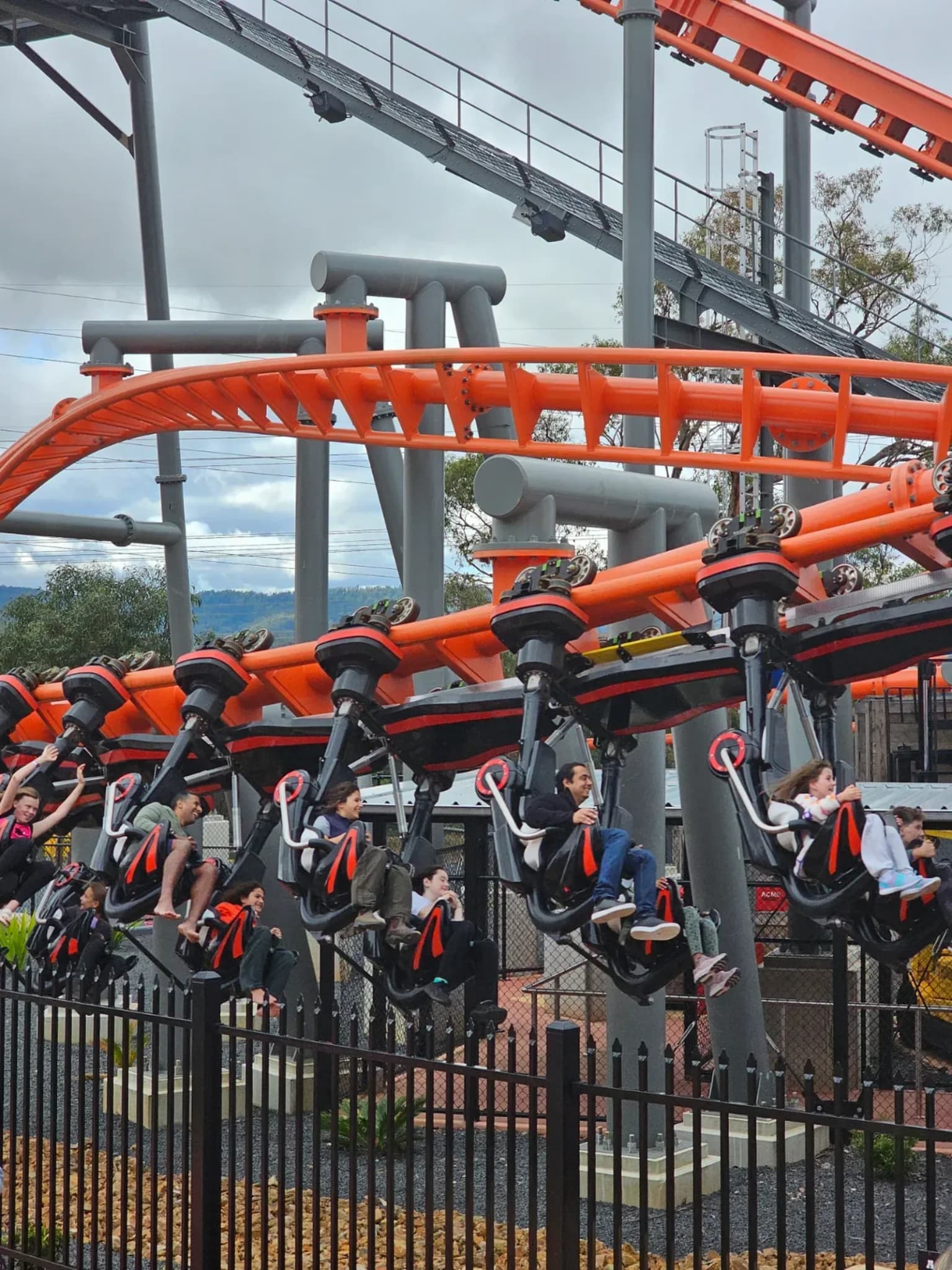
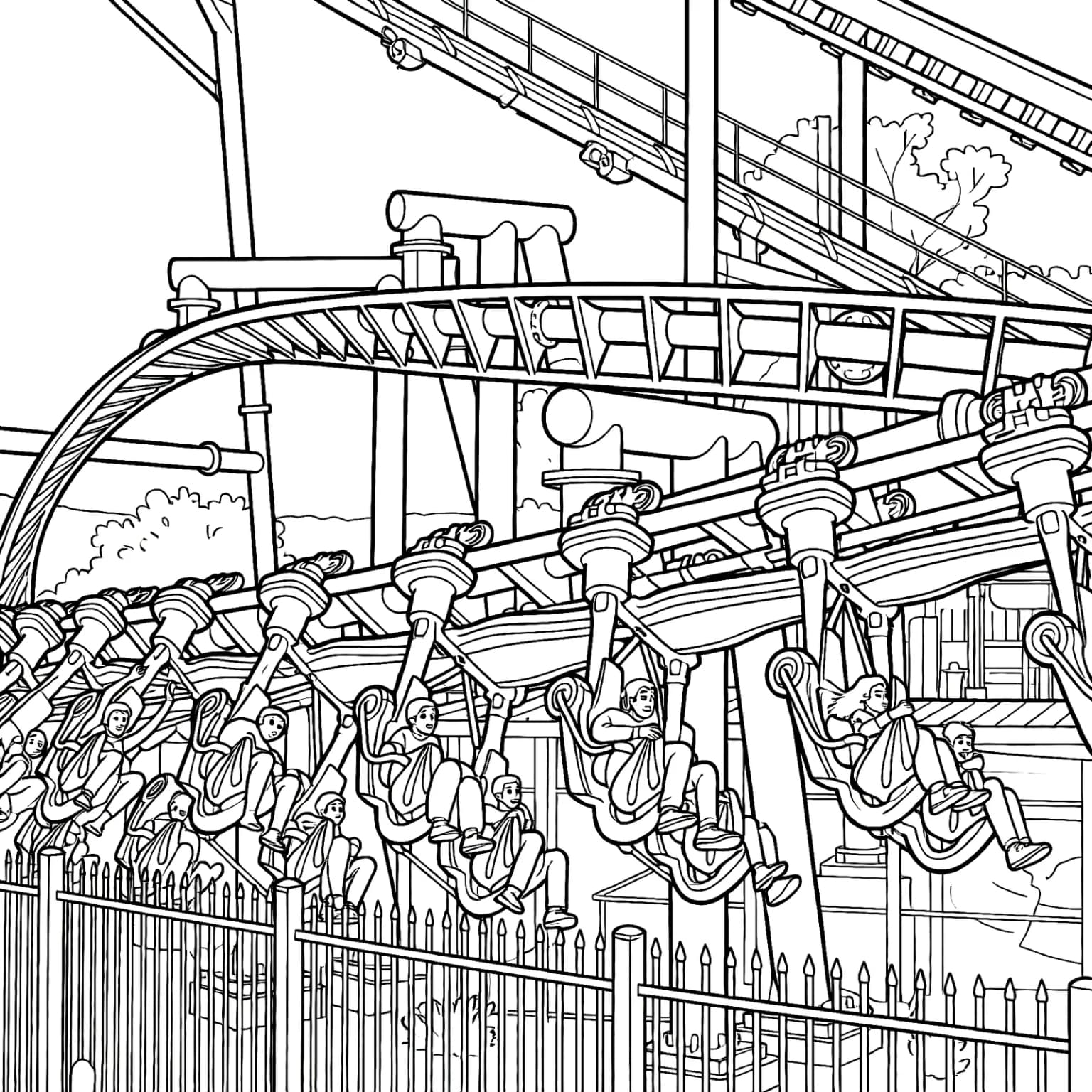
Sometimes the people are where the detail is. This is a rollercoaster with a train of riders hanging under the track, and every one of them has come through onto the page, railings and all.
A horse in a field
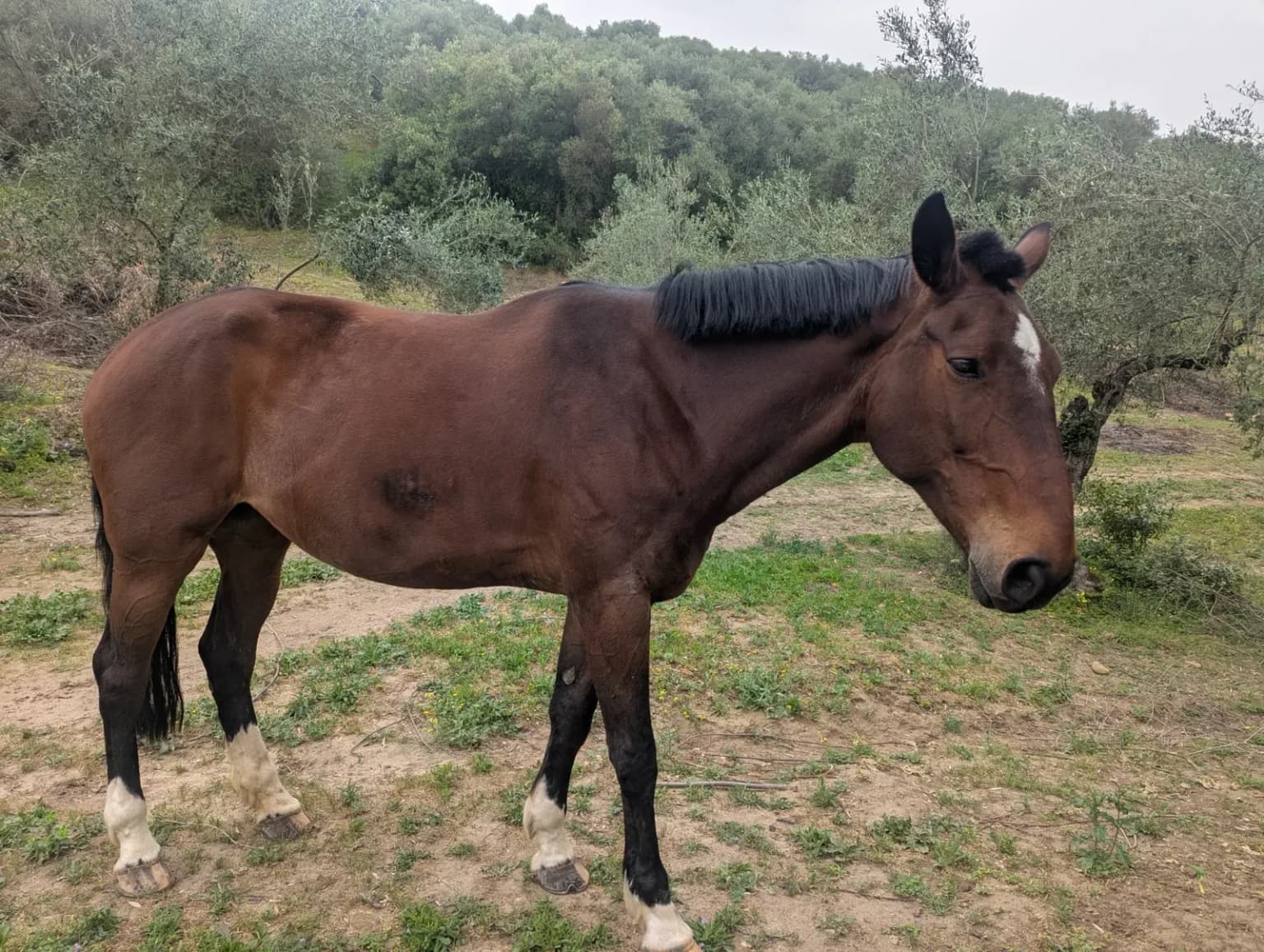
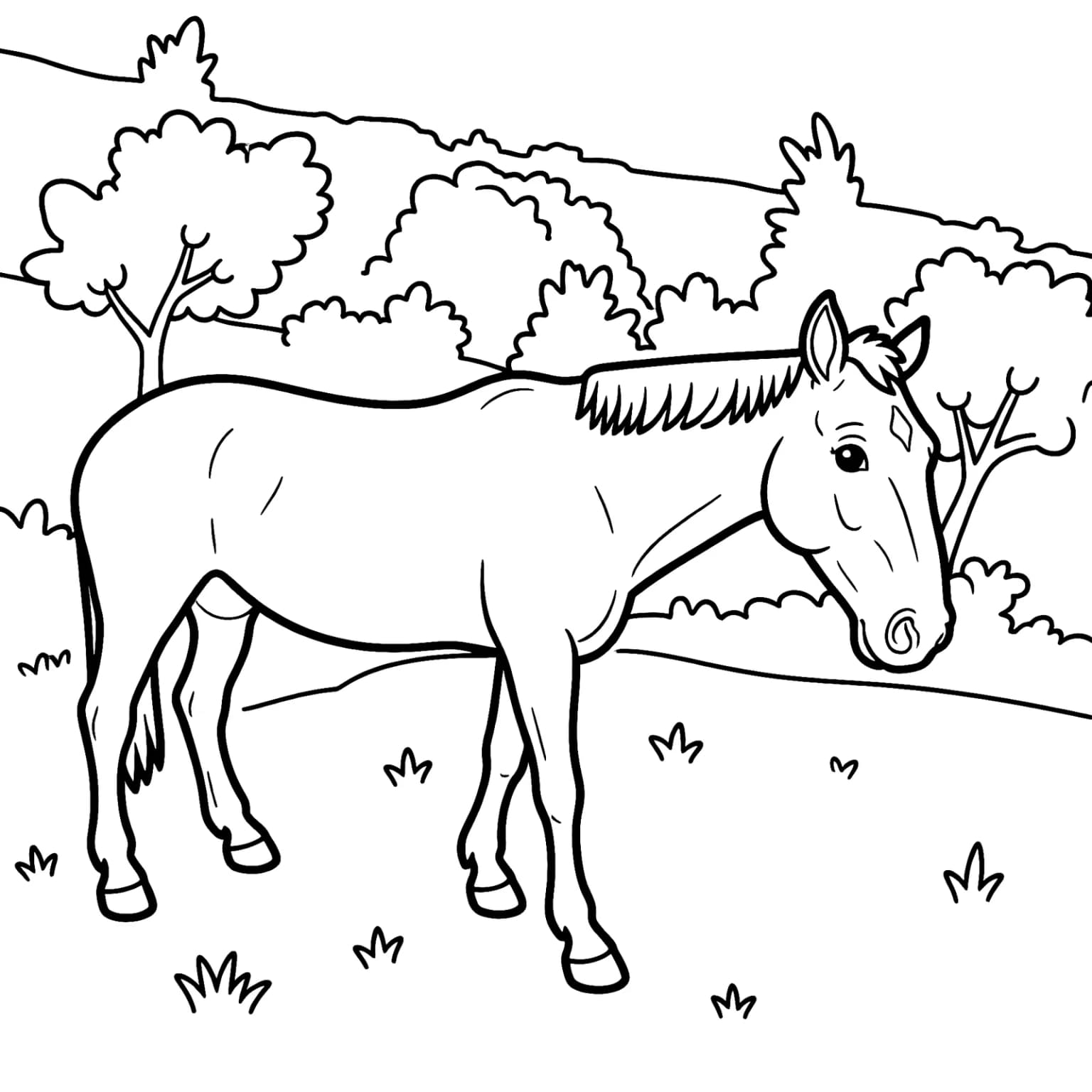
A horse is a simpler page. It comes back as one big shape, with the trees and grass behind it drawn in more lightly, so there is one thing to colour carefully and a background to fill in loosely round it.
Picking oranges
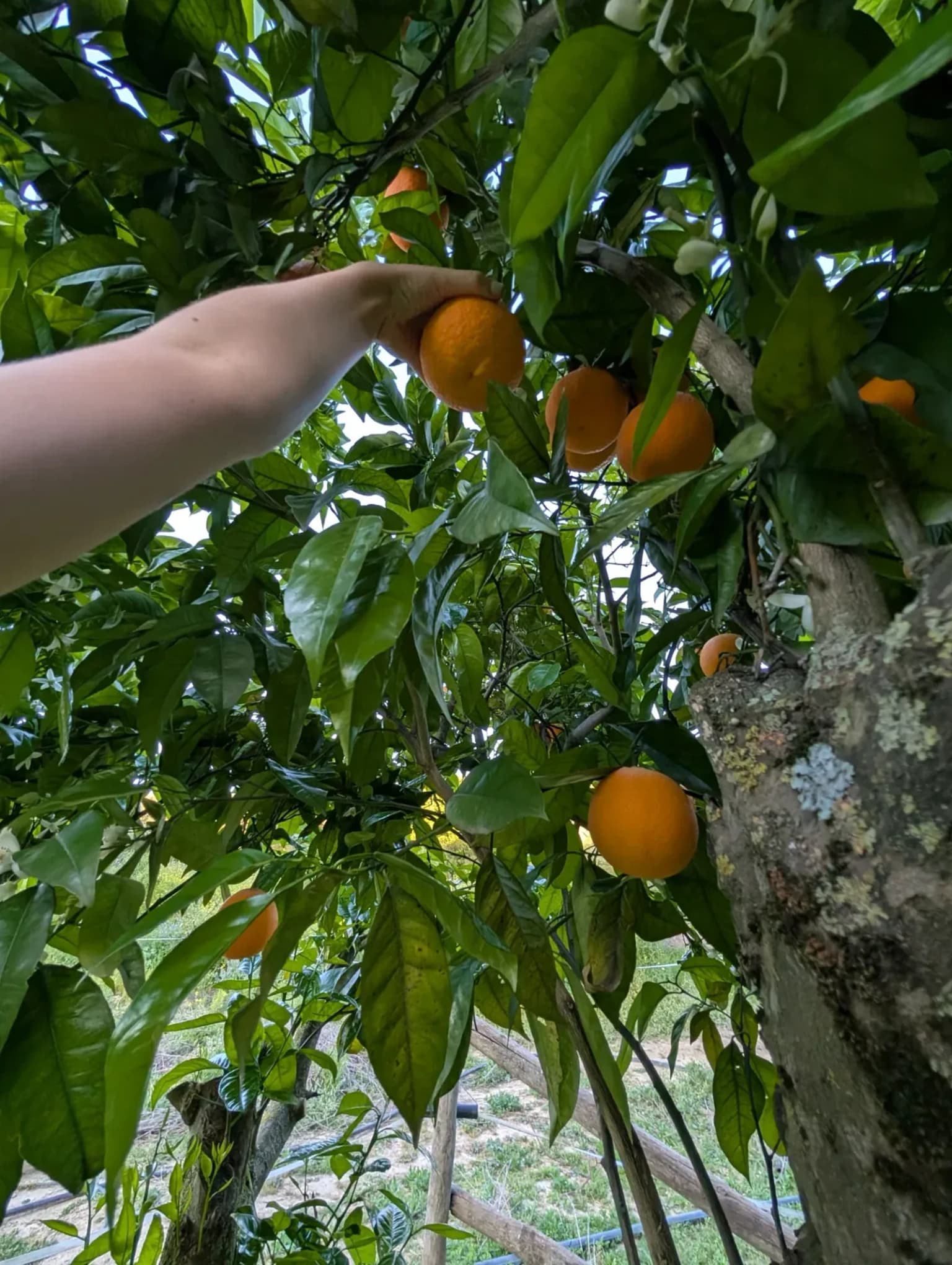
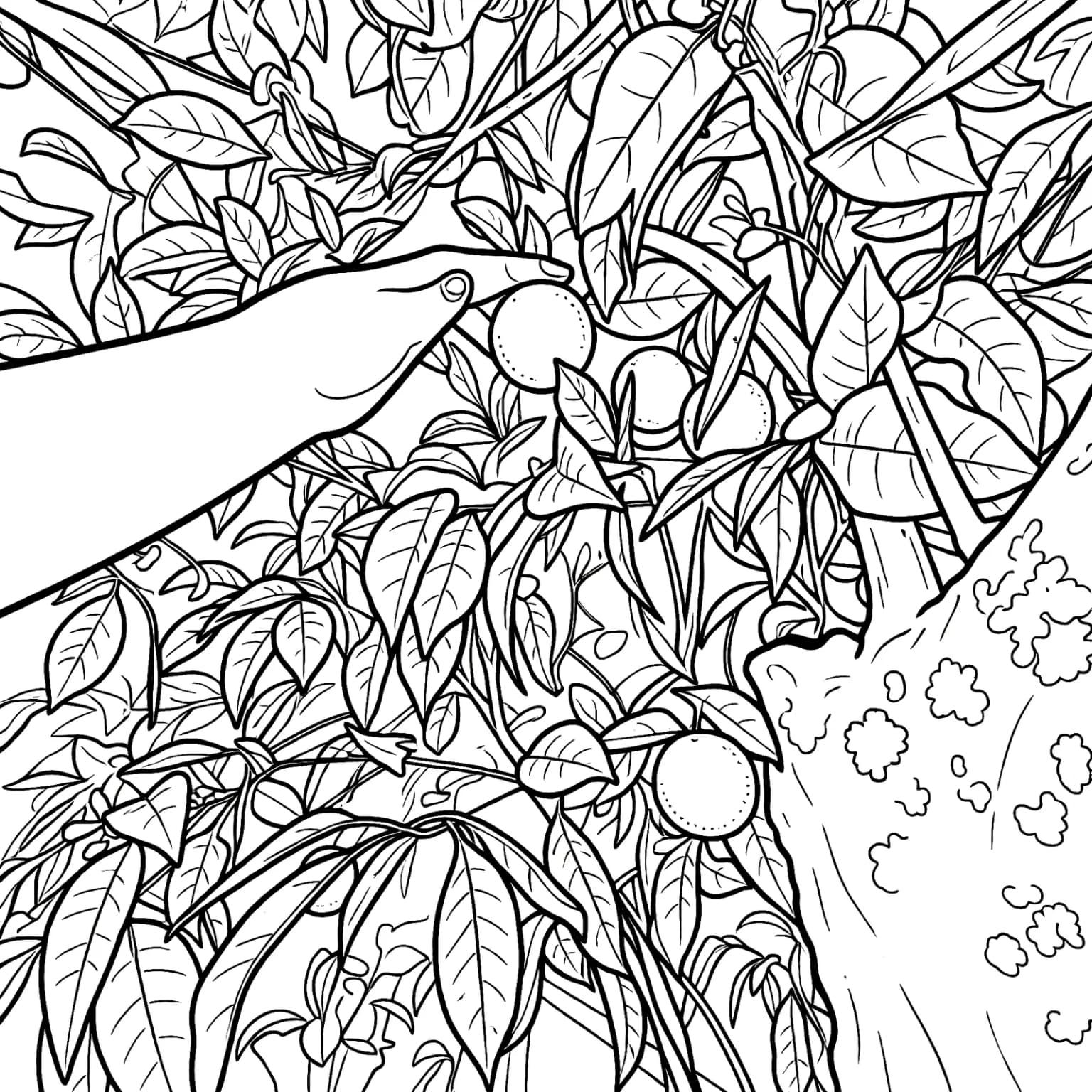
A tree heavy with fruit goes the other way. The hand and the orange are the subject, and the leaves and fruit fill the page right to its edges.
A rose window
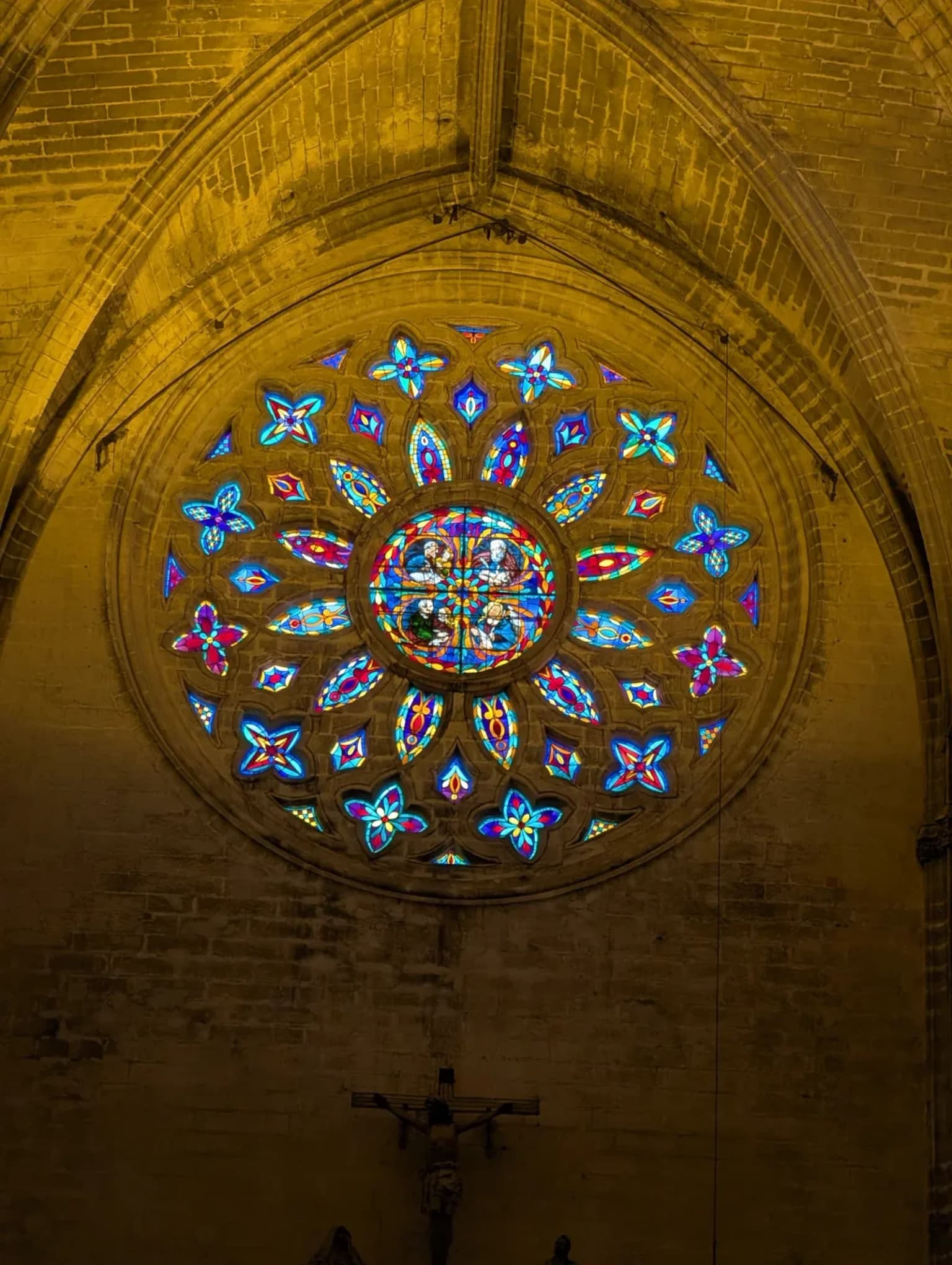
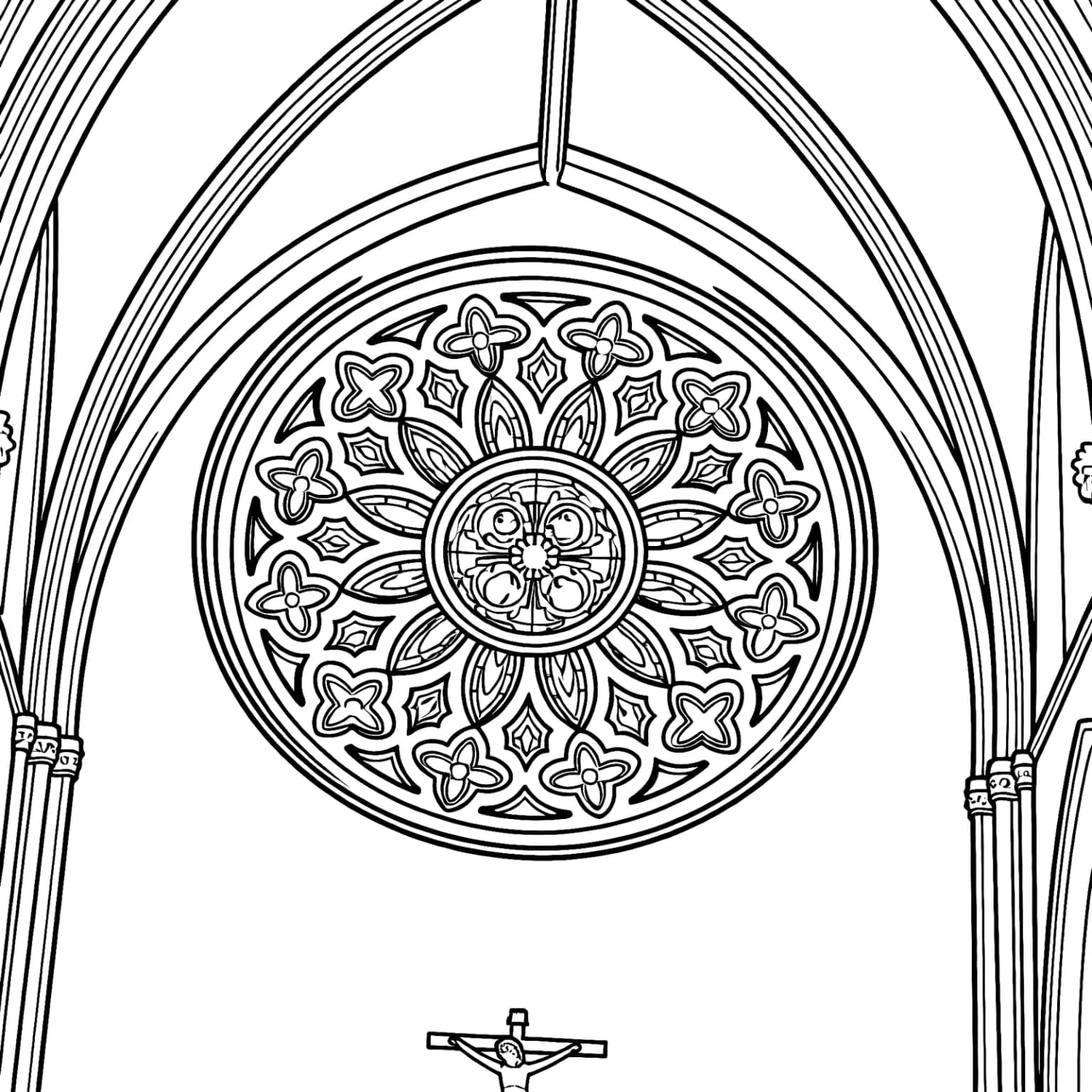
A window like this is a mix. The arch round it is a few big plain areas and the window itself is dozens of small panes, so one person can take the outside and somebody with more patience can take the middle.
A patterned coat, a hedge or a woodland path work like the oranges, shapes at several sizes with somewhere easy to start and a few small bits left for the end.
| Photo | What the page gives you |
|---|---|
| The arches in Seville | Balusters, arches, lamps and clouds, something in every corner |
| The duck on the canal | One shape and a lot of open water, a quick page or one for blending |
| The beach in Cornwall | The town along the top, a boat and a few small figures, mostly open sand |
| Two children in a garden, close to the camera | Faces you can make out, a few areas each on the clothes, leaves round the edge |
| The rollercoaster | Riders, track, supports and railings, a lot of small areas |
| The horse in a field | One big shape to colour carefully, the field drawn in loosely behind it |
| Picking oranges | A hand and an orange, and leaves and fruit to the edge of the page |
| The rose window | A few big areas round the outside, dozens of small panes in the middle |
How do you match the photo to the age of the child?
By how much is in the frame. Simple bold objects make an easier page, big areas and not many lines, and that suits a younger child who wants to get to the end of it. Photos with a lot happening suit a child who will sit with one page for a good while and pick a different colour for every pane in the window.
You don't have to choose. A Toodaloo book has twenty colouring pages, one for each photo, so a few simple ones and a few detailed ones go in the same book and two children of different ages can share it.
What if you would rather not colour inside the lines?
You don't have to. Just because something is subdivided in colouring lines doesn't mean they have to follow it, they can colour in the whole larger object in one colour if they like.
It matters most on the detailed pages. A child who would be put off by forty small areas can treat the same page as five big ones and colour straight over the little lines.
So which of my photos are the wrong ones?
None of them. The important point is making it so that there are no wrong photos or bad ones, it's just that some provide more interesting colouring opportunities than others. You see every page in the preview before you order, and if one has come back thinner than you hoped you can swap the photo in a few seconds and try another. Once you are happy with it, the book is printed in the UK on 140gsm cartridge paper.
If you want to try it with your own, pick a cover from the Holidays & Travel books and upload a few photos.
Questions parents ask
- Is there such a thing as a bad photo?
- No. What changes from one photo to the next is how much there is to do on the page. A market stall keeps a child busy for a good while and a duck on an empty pond is a much quicker page. Neither one is wrong, and a book with both kinds in it is better than a book with only one.
- Can I mix easy pages and detailed pages in one book?
- Yes, and I would. A Toodaloo book has twenty colouring pages, one for each photo, so there is room for a few simple ones and a few detailed ones. That way children of different ages can sit at the same table with the same book and both have something they can finish.
- What if a page comes out with too little on it?
- Swap it before you order. You see every page in the preview, and swapping one costs nothing and takes a few seconds. If a photo has come out emptier than you expected, the usual fix is a different photo of the same day, taken closer or with more going on behind the subject.
- What kind of photo files can I upload?
- Most photos straight off a phone are fine. Toodaloo takes JPG, PNG, WEBP, HEIC and AVIF, which covers an iPhone and an Android without converting anything first. Every outline is drawn inside a square, so it doesn't matter whether you held the phone upright or sideways, and you see how each one has been framed in the preview before you order.
Make a book from the photos you've already got
Pick twenty photos off your phone, we draw them as colouring pages, and you see every page before you buy.
Any photos to start. Nothing is charged until you approve every page.