What age do children colour inside the lines?
There is no official age at which a child colours inside the lines. The NHS describes four stages of colouring and does not put an age on any of them, and the Department for Education says in its own early years guidance that children's learning "is not so neat and orderly". So if you are here because your three-year-old has scribbled straight over a picture, nothing has gone wrong.
Jump to contents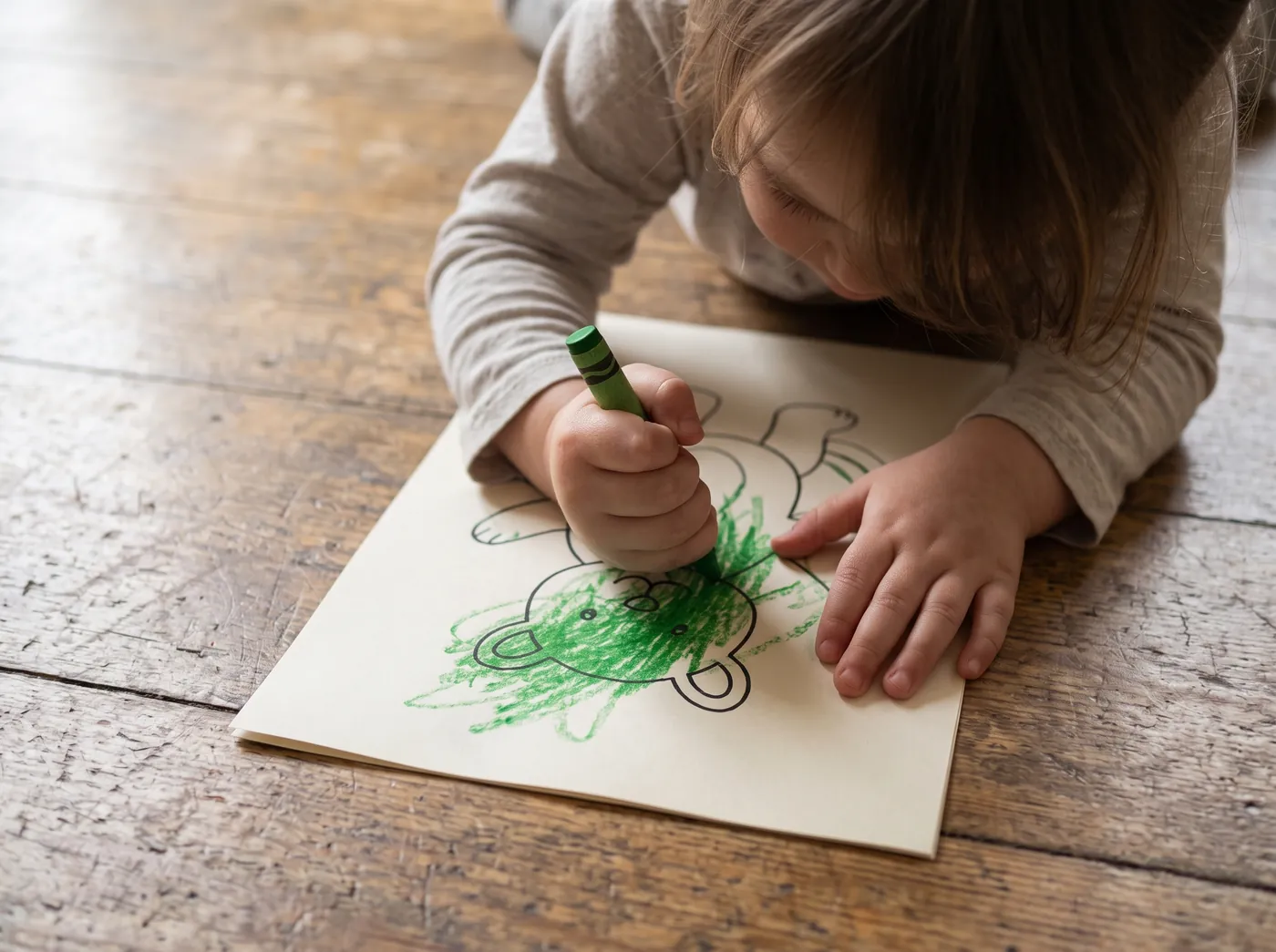
What age do children colour inside the lines?
There is no milestone age for it in UK guidance. What there is instead is an NHS occupational therapy leaflet on colouring development, which sets out four stages: making marks on anything to hand, then colouring roughly at an object, then understanding where the boundaries are, then filling a space tidily. It describes what each stage looks like. It never says when.
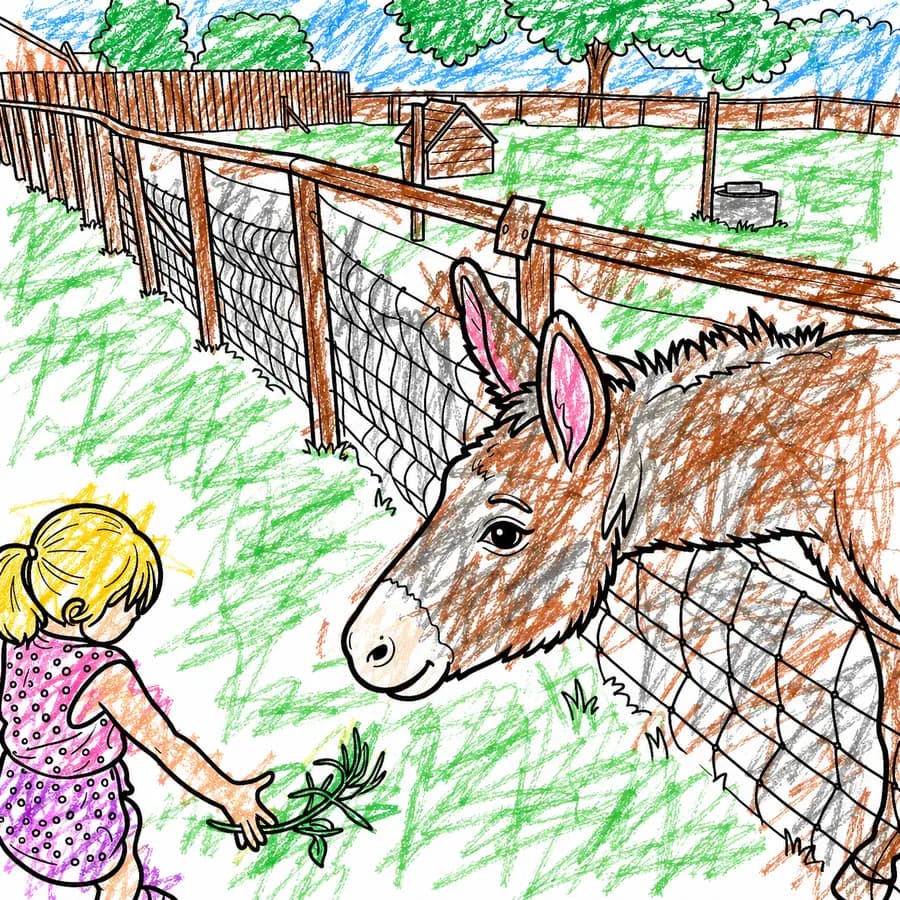
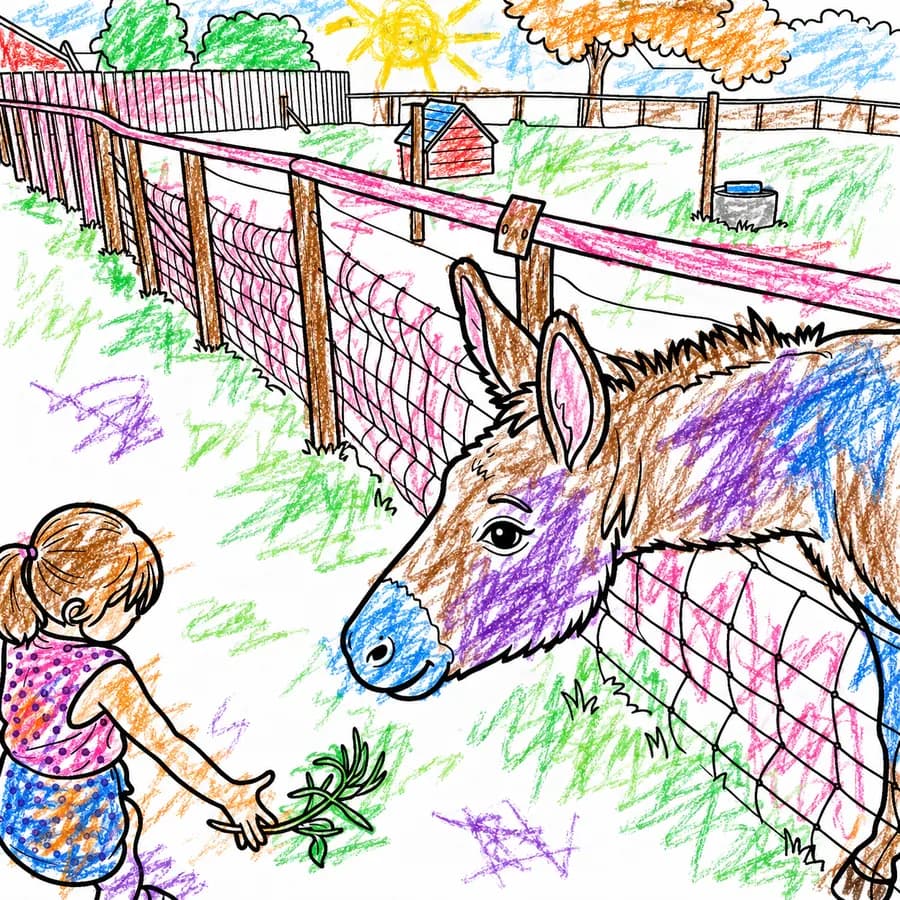
That is not the NHS being vague. The Department for Education's early years guidance makes the same point directly, and it is worth reading twice if you are worried. Its stages are "broad ages and stages", it says, and "the actual learning of young children is not so neat and orderly". It also says the guidance "is not designed to be used as a tick list", and that anyone using it has to account for "the different rates at which children are developing".
You will find ages online that say four, or five, or by their fifth birthday. The ones I looked at came from American shops and therapy blogs rather than from anybody's health service, so take them with a pinch of salt.
What does staying inside the lines actually show?
Pencil control, mostly. The NHS leaflet describes colouring as a way to develop "pencil grasp, pencil pressure, pencil control and an awareness of boundaries", which is four separate things, and staying inside the line is the one you can see from across the table.
The order they arrive in is the useful bit. At its third stage the leaflet describes a child who has started "to show an understanding of the boundaries of the pictures, but may not yet have the pencil control to stay fully within the lines". Knowing where the line is comes first. Being able to follow it comes later, and the gap between those two is where most of the worrying happens.
The same leaflet says plainly that this takes work: "the skill of colouring within the lines requires practise and some children may find this challenging".
What else is happening while they colour?
Plenty, and most of it is not visible in the finished page.
They are holding a pencil, which is a grip and a pressure and a set of small muscles. They are deciding where to start and whether to carry on. And they are choosing colours, which is the part worth talking to them about. The NHS leaflet's advice on that is my favourite line in it: talk about the colours your child has chosen, "but accept their choice even if it seems unusual!" Even if that means the grass is blue, or the sky is pink.
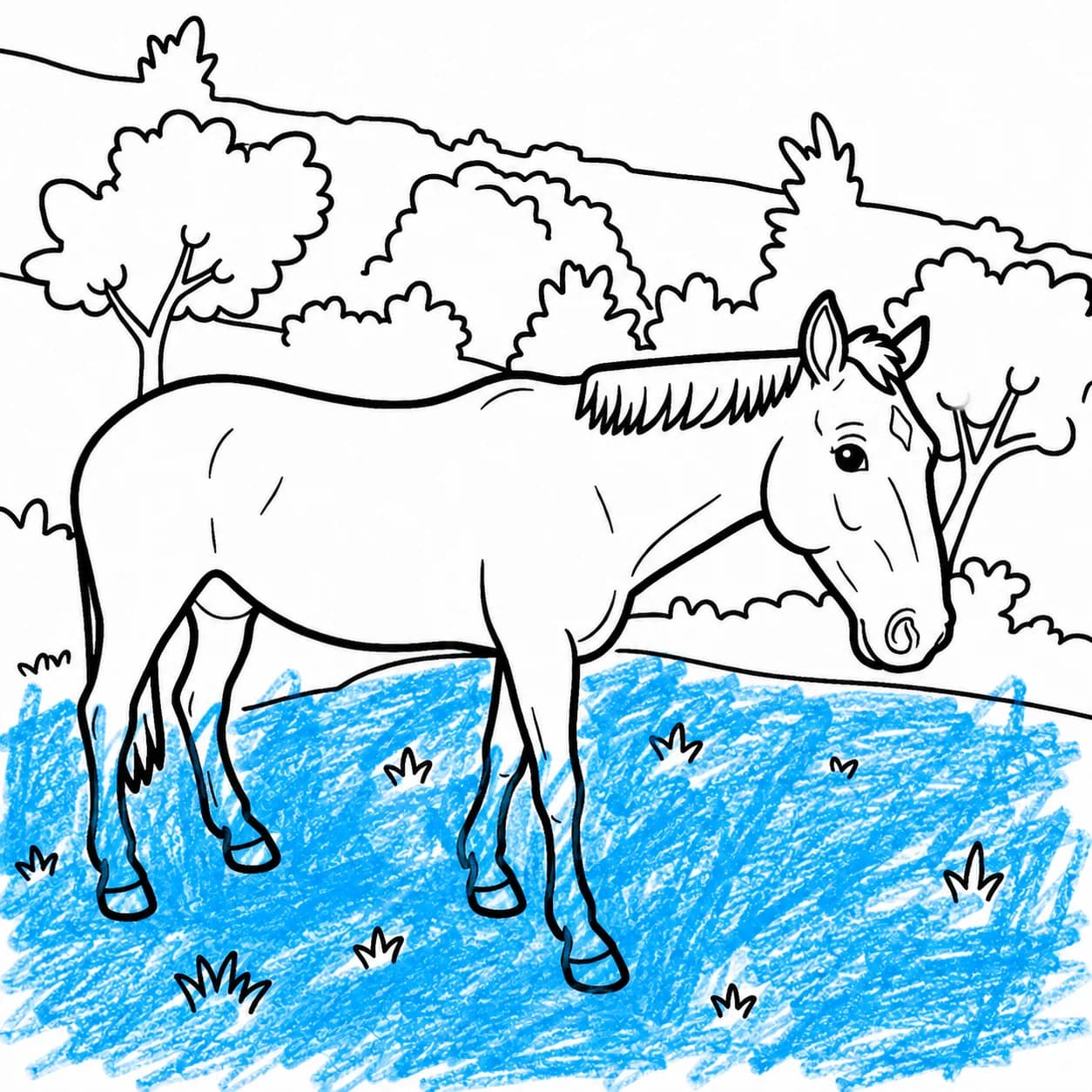
That is a choice, and so is colouring the whole horse in one go, or covering the picture and then going over the top of it again. None of that is a mistake being made, it is a child working out what they want to do with the page.
What if the page is the problem?
Sometimes it is. A picture with forty small areas in it will defeat a child who would be perfectly happy with four big ones, and the page gets blamed on the child.
The NHS advice here is practical. Keep the areas to be coloured "small and achievable, so that their colouring attempts are successful", then make them bigger as they go. Go over the outline with string or something chunky so the boundary is a thing they can feel and not just see. And, the one I would not have thought of, show them that adults go outside the lines too. The leaflet frames all of this as helping a child "understand the lines as boundaries without drawing attention to their mistakes", which seems like the right way round.
If the picture in front of them is simply too busy, the photos that make the best colouring pages covers how a simpler page comes about. And there is no rule that says the lines have to be obeyed at all, which that same guide gets into.
Does the subject of the colouring book matter?
Children pay attention to things they recognise. Some studies suggest that making content personal helps: in one UK study preschoolers learned new words better from the personalised parts of a book than from the generic parts, and three and four year olds have been shown to remember material better when it is connected to them. Those studies are about stories and learning, but it would not be a stretch to think the same would apply to colouring too.
I have certainly found that with my kids. Give them a page of somewhere we have been and they are properly in it, and it is hard to pull them away. That is the whole idea behind Toodaloo: the pages come from your own photos, so the thing being coloured is a day the child was actually there for. A page of somewhere they have been is a different proposition from a page of a cartoon character they have never met, and if they want to colour the sea orange because that is their sea, that seems fair enough to me.
So should you be doing anything?
Probably not, beyond what you are already doing. Colour in with them. Ask about the colours. Keep the pictures small enough to finish. Let them see you go over a line now and then.
The one thing I would not do is point out where the colouring went outside the lines, because the NHS guidance goes out of its way to suggest ways of helping that avoid exactly that. A child who is enjoying a page is getting the thing out of it that matters, and the tidiness turns up on its own schedule.
Questions parents ask
- Should a three-year-old be able to colour inside the lines?
- Not necessarily, and there's no official age at which they should. NHS guidance describes colouring as a set of stages rather than ages, and says staying within the lines takes practice and that some children find it hard. A three-year-old who understands where the line is but can't yet hold a pencil steadily enough to follow it is doing exactly what that guidance describes.
- My four-year-old doesn't colour inside the lines. Is that normal?
- Yes, commonly. The Department for Education says children's learning isn't neat and orderly and that its own guidance isn't a tick list. Children arrive at pencil control at different points. If you want to help, the NHS suggests smaller areas to colour so the attempts feel successful, rather than pointing out where they went over.
- How can I help without making my child self-conscious?
- The NHS suggests a few things. Keep the areas small and achievable at first, then make them bigger. Go over the outline with string or a chunky line so the boundary is something they can feel. And show them that adults go outside the lines too, which does the work without drawing attention to their mistakes.
- Does it matter if they colour everything one colour?
- No. NHS guidance on talking to children about their colouring says to accept their choice even if it seems unusual. Colour choice at this age is a choice, not an error, and asking them about it is more use than correcting it.
Make a book from the photos you've already got
Pick twenty photos off your phone, we draw them as colouring pages, and you see every page before you buy.
Any photos to start. Nothing is charged until you approve every page.