What thickness of paper stops felt tips bleeding through?
Paper from about 120gsm up stops most felt tips going through to the other side, and 140gsm holds up even when a child presses hard. Printer paper is 80gsm, and plenty of colouring books are not far off that. That is why the ink so often shows through on the back of the page. Toodaloo books are printed on 140gsm for that reason.
Jump to contents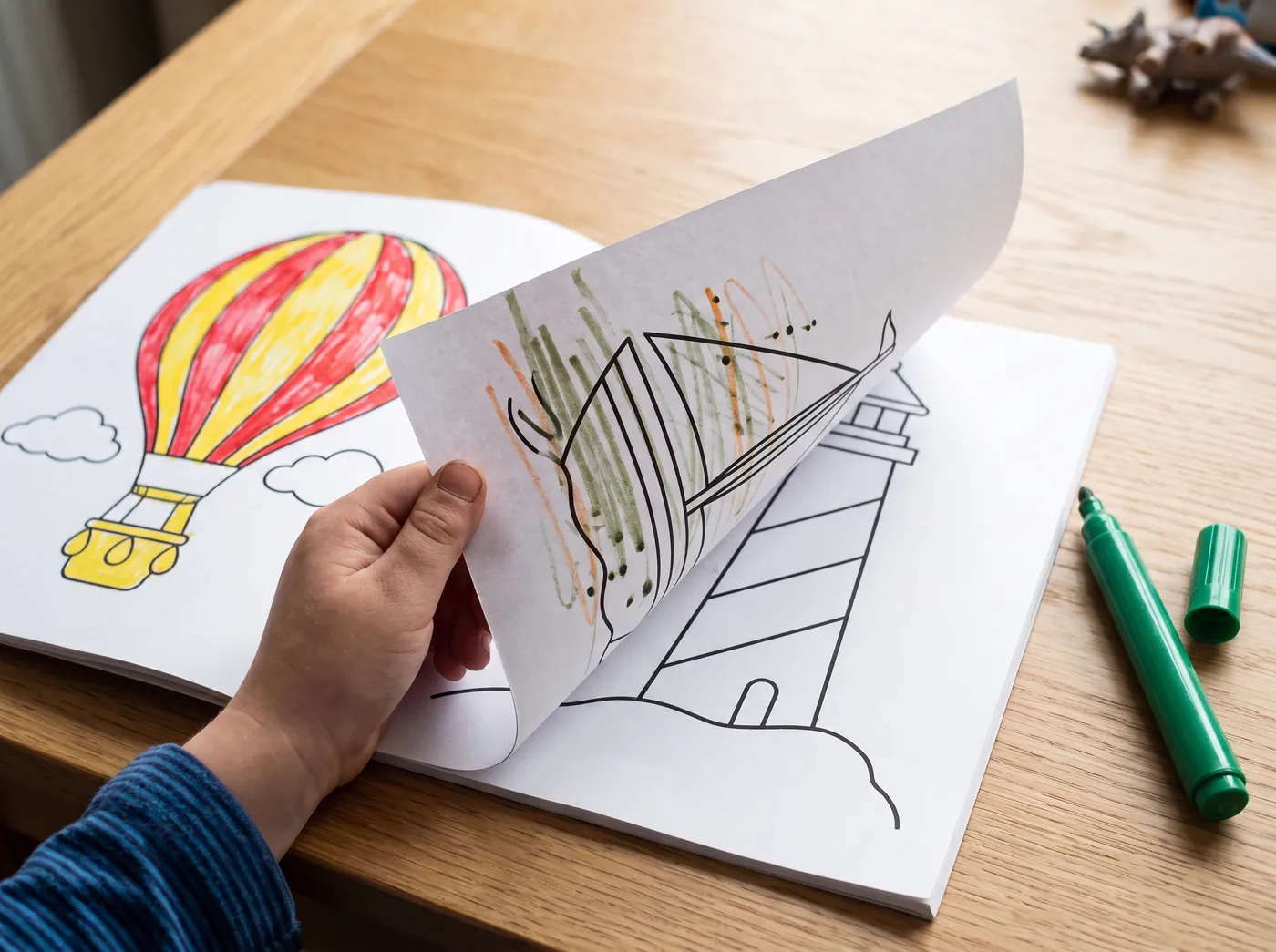
In every off-the-shelf colouring book I bought, the ink went through the page, whichever felt tips we used. So when I started making personalised colouring books, the paper was the first thing I wanted to get right. I tried everything from 120gsm up to 160gsm, on test pages my kids coloured in, and the numbers below are what came out of that.
Why do felt tips bleed through colouring books?
A felt tip puts down wet ink. The ink soaks into the paper, and if the paper is thin it goes all the way through. Pencil and crayon leave colour on the surface instead, so they don't go through.
What gsm paper stops felt tips going through?
Sketchbook paper, at 120gsm or more. Printers call it cartridge paper. The thicker the paper, the further the ink has to travel before it reaches the other side, so weight is what does most of the work.
Paper is sold by weight rather than thickness, and the number on the pack is grams per square metre, gsm for short. The bigger the number, the thicker the paper. A UK printer lists these weights, and here is what each one feels like in the house.
| Paper | Weight | What it feels like | Felt tips go through? |
|---|---|---|---|
| Printer paper | 80gsm | Thin, flops if you hold it by one corner | Yes |
| Headed notepaper | 110 to 120gsm | Noticeably stiffer, still bends | Borderline, 120gsm is the lowest I'd use |
| A leaflet, a printed booklet | 130 to 170gsm | Holds its shape, doesn't crease when you turn it | No, this is the range that works |
| Sketchbook paper, what we print on | 140gsm | Slightly rough to the touch, doesn't feel like printer paper | No, with room for a heavy hand |
| Greetings card | 250 to 300gsm | Card, stands up on its own | No, but this is cover weight, too stiff for pages |
Why print on thicker paper than the minimum?
120gsm is where the ink stops going through, but it isn't where a child gets the nicest page to colour.
The pen and the hand
A fat pen puts down a lot more ink than a thin one, and a child who goes over the same patch four times puts down more still. If your child uses fat pens and presses hard, you want 140gsm.
Printed on both sides
In a book printed on both sides on thin paper, the ink that goes through lands on the picture behind. That one is spoilt before your child gets to it.
A book printed on one side only isn't safe either, which is what usually catches people out. The ink still goes through to the back of the sheet, and if the book gets closed before it dries, that back is pressed against the next page and marks it. Some books give you a spare sheet to slip in between, which is a faff and the first thing to get lost.
If a book you already own is going through, the paper is the paper and you can't change it now. Pencils and crayons will still work on it, because they sit on the surface instead of soaking in. A sheet of card behind the page stops the ink reaching the picture behind, though it won't stop it marking the back of the page they're on.
Does the surface matter as well as the weight?
Yes. Weight decides whether the ink goes through, the surface decides how the colour looks on the front.
Paper with a slightly rough surface takes the colour where you put it, and it goes down evenly. On shiny paper the ink slides and pools instead, and it sits there wet rather than drying into the page. That is what makes a magazine page hopeless to colour on.
The surface also has to be the same all the way across, or the colour goes streaky in one corner. Sketchbook paper is made for exactly that, and it's what we print on.
What paper is a Toodaloo book printed on, and why?
A Toodaloo book is printed on 140gsm sketchbook paper, both sides of every page. That's where the test landed. 140gsm is thick enough to stop the ink and still easy to colour on and handle. 160gsm was starting to feel stiff when my kids turned the pages, so 140gsm is where I stopped.
What else matters about the paper
It's acid-free so it won't go yellow like an old paperback, and it's FSC certified, so the wood is from responsibly managed sources. It's made in Britain. It's also vegan, which sounds a strange thing to say about paper until you find out not all paper is.
Which photos to choose is a different question, and the photos that make the best colouring pages covers that.
How do you check a colouring book's paper before you buy it?
120gsm is the lowest I'd buy, and 140gsm if the pages are printed both sides.
Look for the number
The number is usually on the back cover, or in the description if you're buying online. A book on decent paper usually says so on the cover.
Feel it
A book that comes with a spare sheet to slip in between is telling you the paper is thin. Failing that, take a sheet of printer paper in with you and feel the two together. You want the book page to be noticeably thicker.
Holding a page up to the light doesn't tell you much. You can see the picture on the back of one of our pages through a window and the felt tip still stays on the front. Seeing through a page isn't the same as ink going through it, so it isn't a test worth trusting.
A Toodaloo book is twenty colouring pages, one for each of your own photos, printed on 140gsm right through. Both sides of every page, so nothing a child colours on the front spoils the picture behind it.
Questions parents ask
- Are pencils safer than felt tips for bleed-through?
- Yes. Pencil and crayon leave colour on the surface, they don't soak in, so on printer paper they still won't go through the way a felt tip does. A felt tip puts down wet ink, and the thinner the paper the further that ink travels. So if a book is on light paper, pencils or crayons are the safe choice. Save the felt tips for a book on 120gsm or more.
- Do washable felt tips bleed less?
- Not reliably. Washable means the ink comes off skin, tables and clothes. It doesn't tell you how far the ink goes into the paper. The weight of the paper matters far more than the pen. On 140gsm most children's felt tips stay on the front, washable or not.
- Can a child colour both sides of the page?
- Yes. A Toodaloo book is printed both sides on 140gsm, so a child can colour both sides of a page. On that weight most felt tips stay on the side they were used on. On lighter paper the ink from the first side comes through, so the second side is already marked before they start on it.
- Can I print colouring pages at home on thicker paper?
- Usually, yes. A pack of 120 or 140gsm sketchbook paper from a stationer is the weight that works in a colouring book. Check the maximum paper weight in your printer's manual first, every printer has a different limit. Paper that is too heavy won't feed properly.
Colouring books that hold the ink
Twenty of your own photos, drawn as colouring pages and printed on 140gsm both sides. You see every page before you buy.
Any photos to start. Nothing is charged until you approve every page.